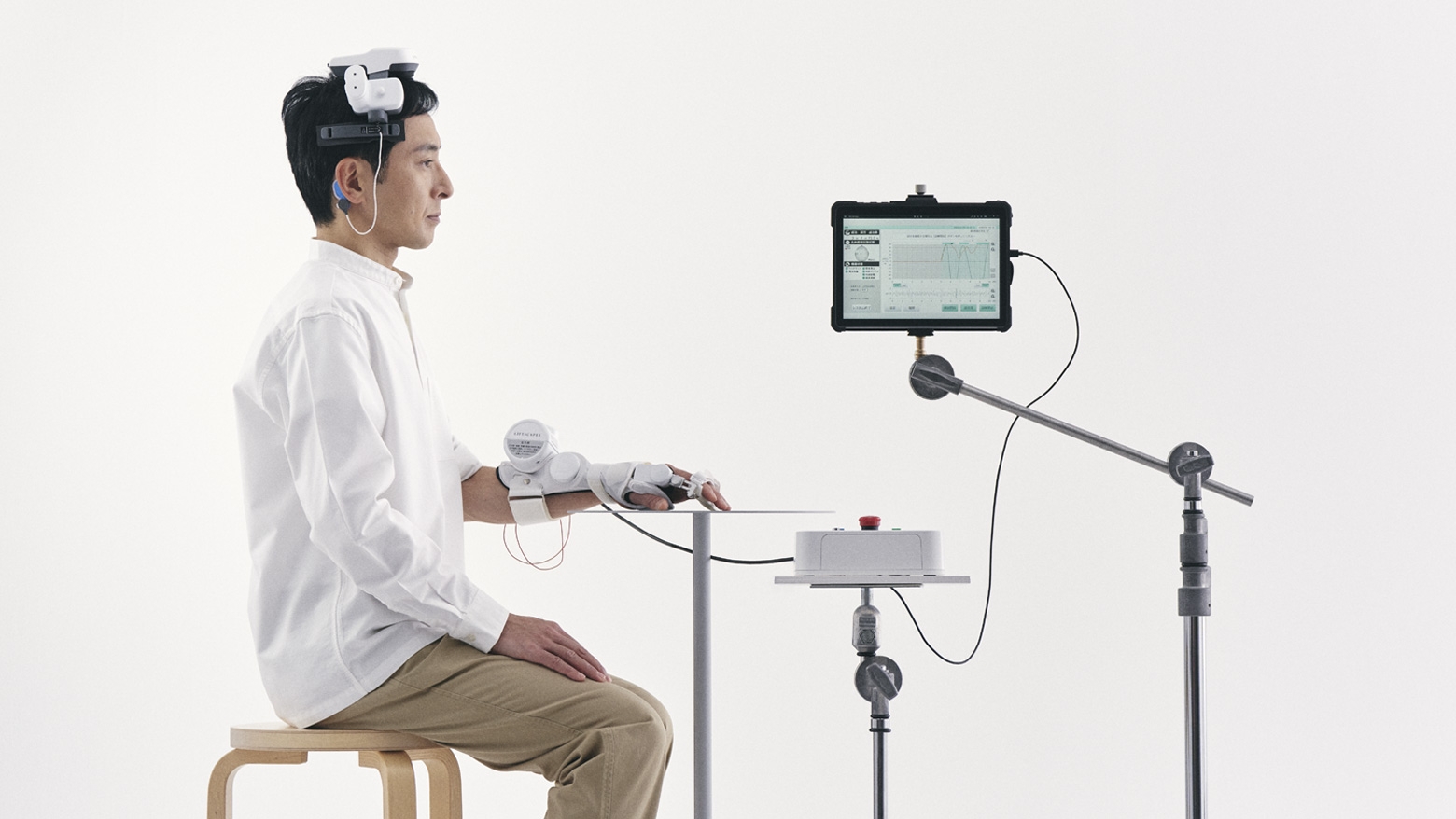
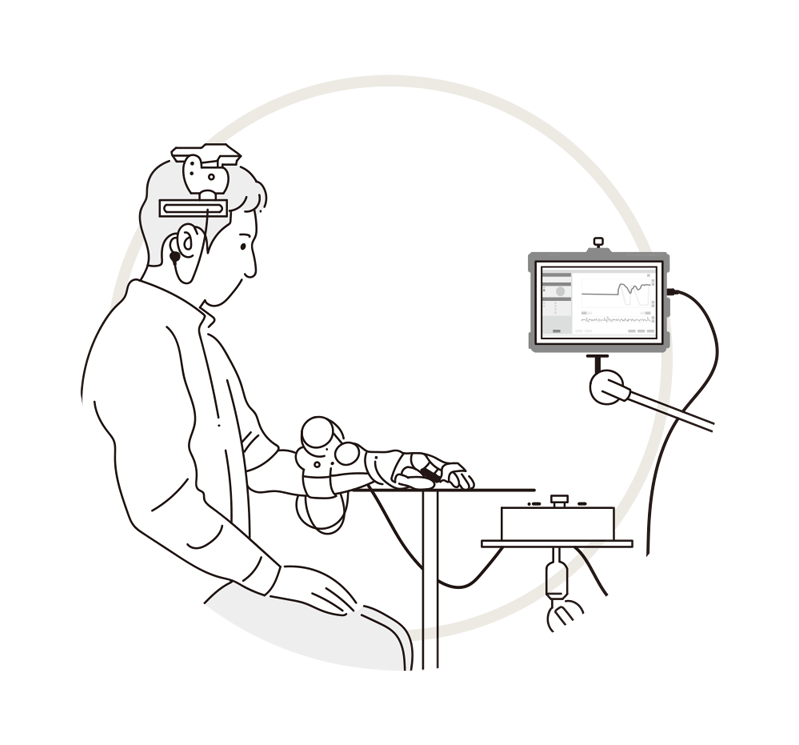
It measures biosignals from the scalp with high sensitivity, and when appropriate motor
intentions are detected, the robotic orthosis is activated. At the same time, electrical stimulation is applied to the agonist muscle, making it easier for patients to perceive that the movement was generated by their own intention.
Each time the patient imagines the correct movement, the electrical stimulation and robotic assistance provide timely feedback.
System Components
-

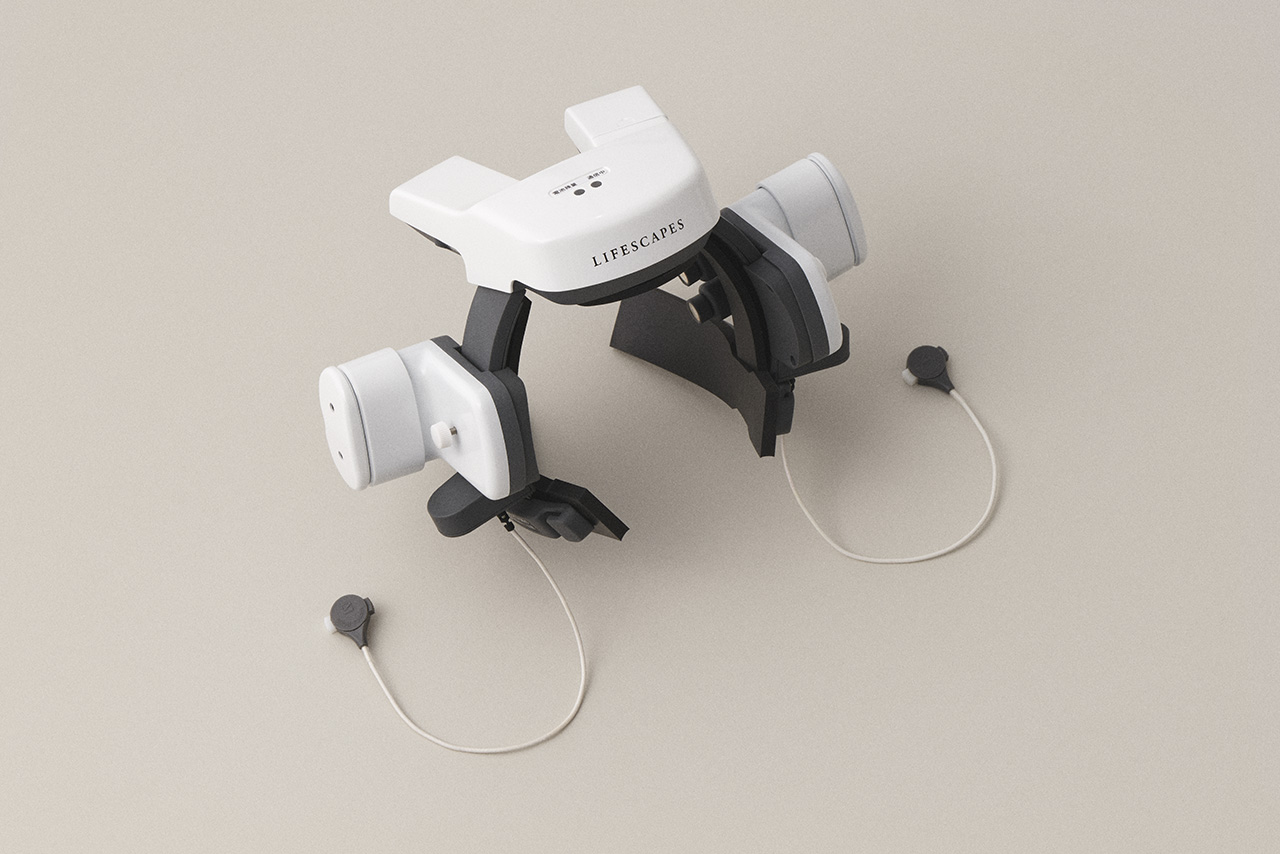
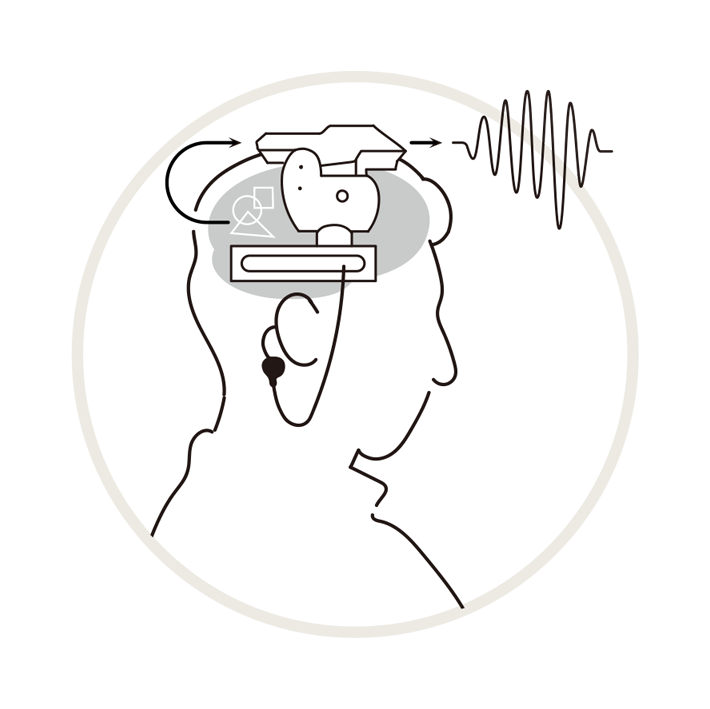
Headset
Experience the ease of a wireless headset that records biosignals directly from the scalp, just like wearing regular headphones. Its wireless design eliminates cables that can interfere with training, while also providing a clean, streamlined appearance. The headset is designed for simple and easy setup, allowing biosignal recording to begin with minimal preparation.
-
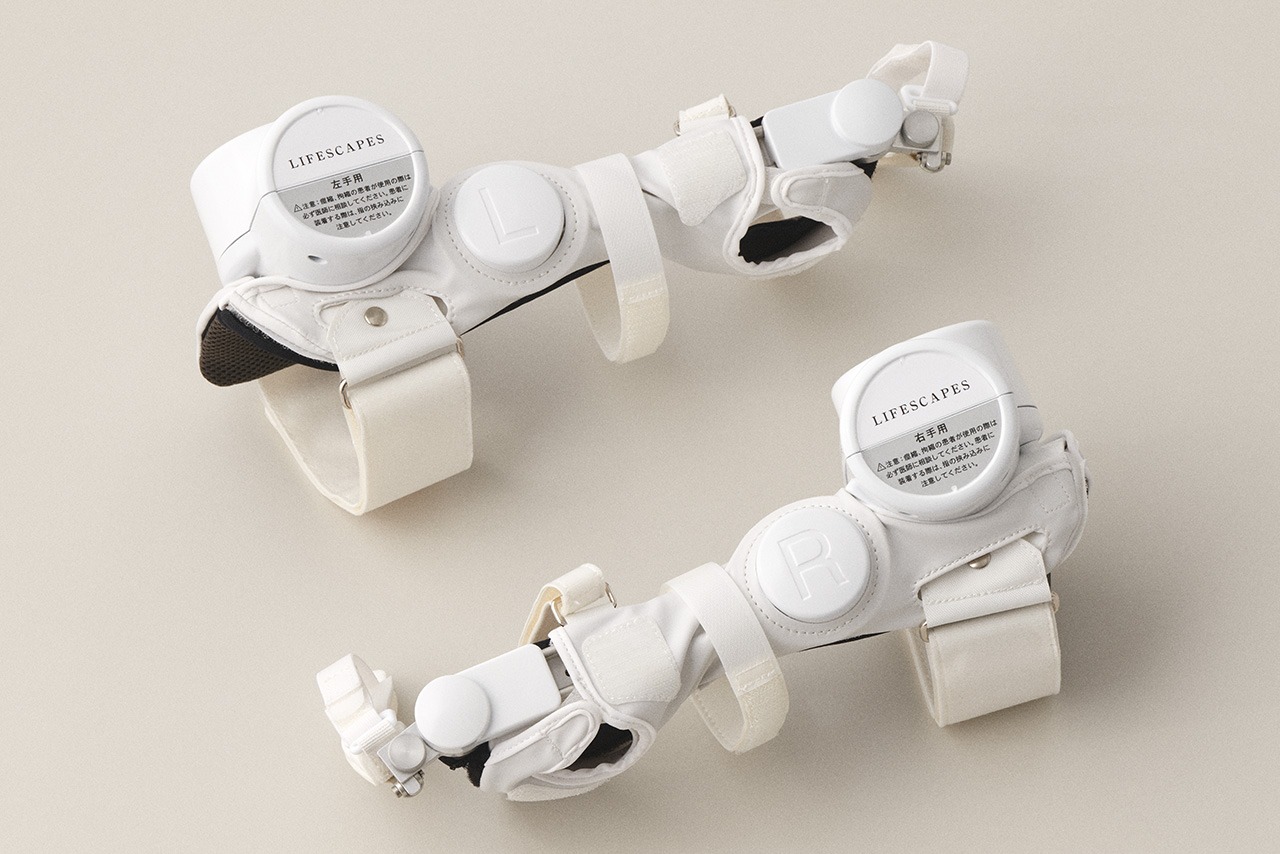
Powered Orthosis
The orthosis provides a lightweight, open-finger design that enables patients to view their hand during training. The finger supports can be adjusted to the length of each patient's fingers. The device holds the thumb in opposition—a position known to inhibit spasticity—while specializing in mass flexion and extension of the four fingers, enabling intensive and repetitive training.
-
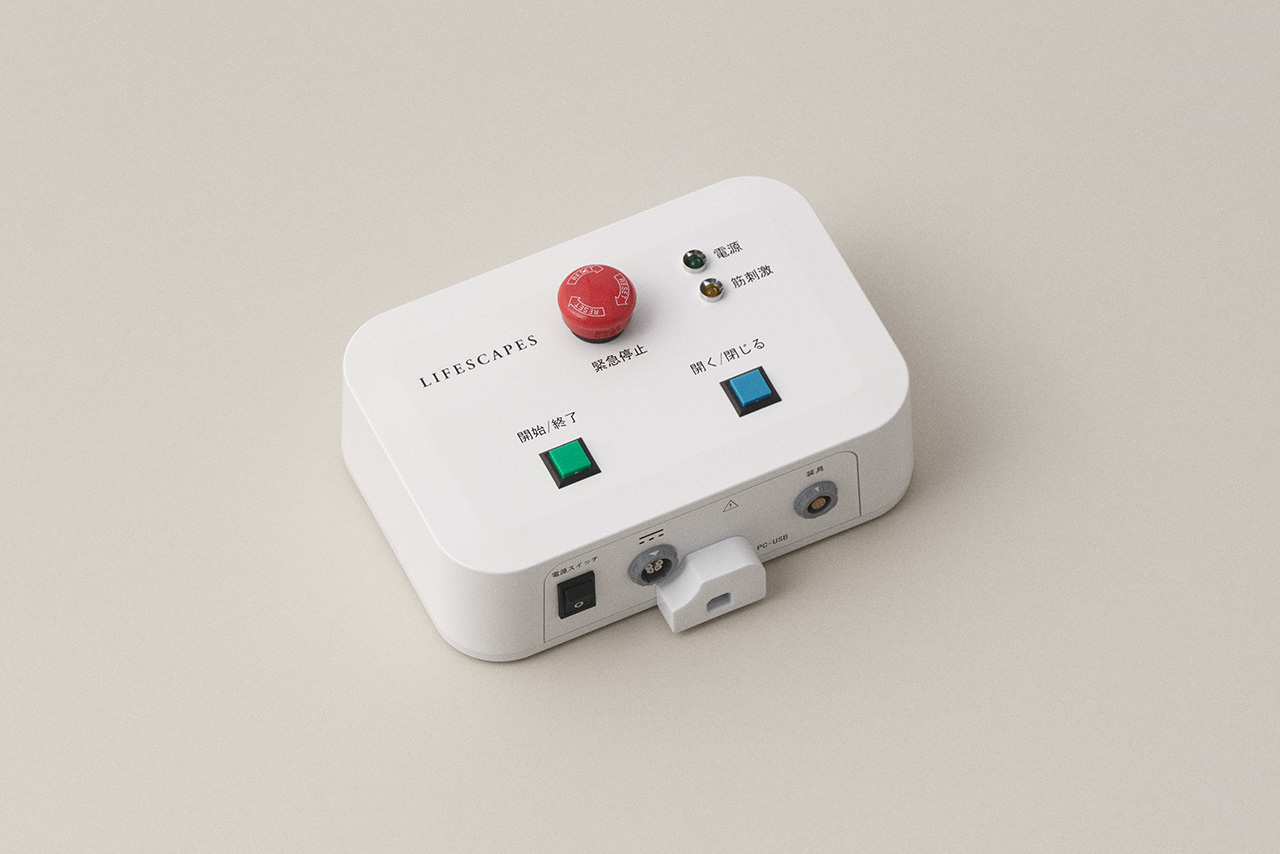
Control Box
Training can be started and stopped, and the powered orthosis opened and closed, with a single button. The emergency stop button is placed within easy reach on the same controller.
-
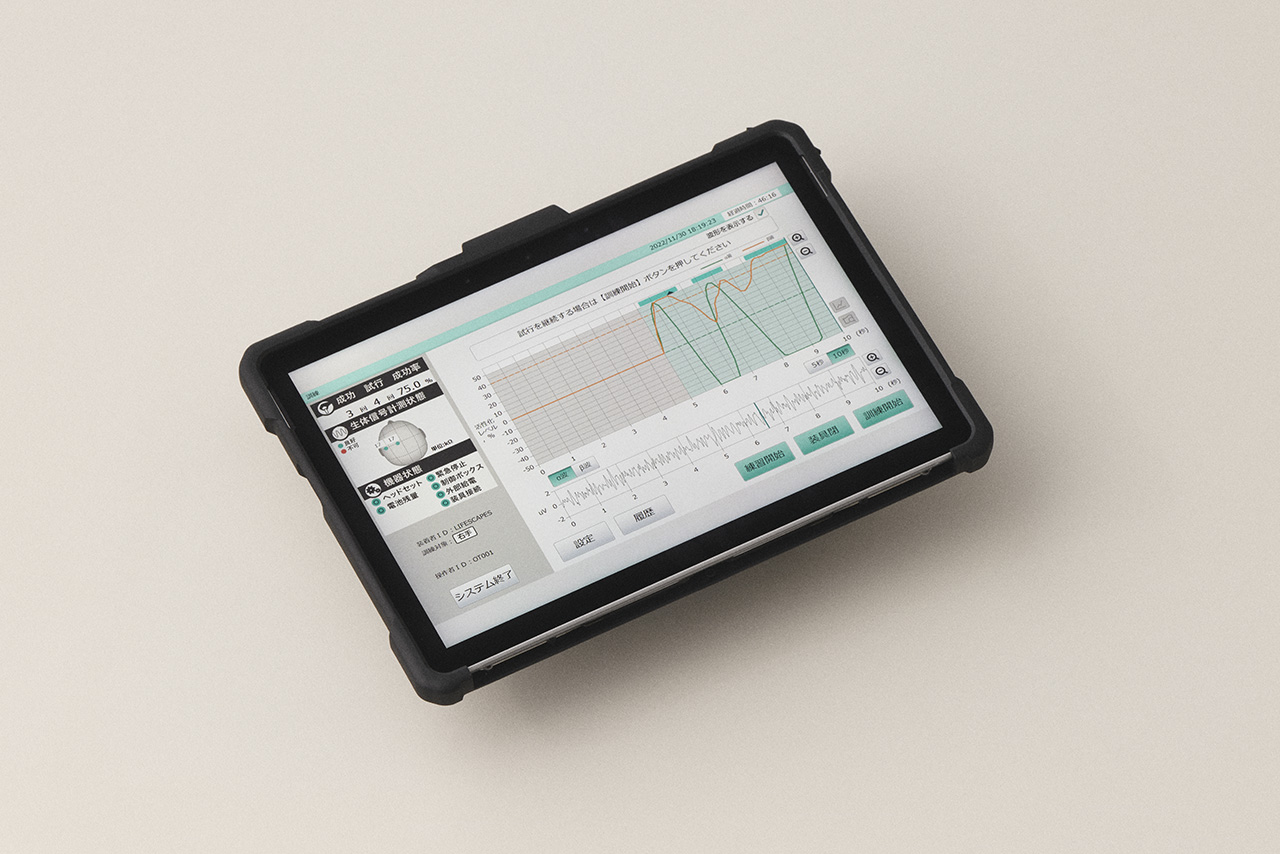
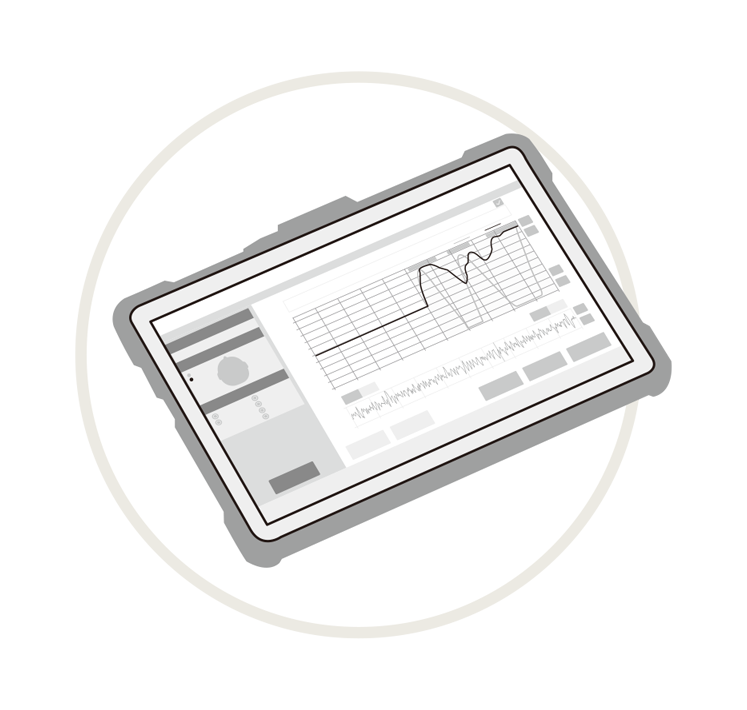
Control Computer
The monitoring function allows the quality of biosignals to be checked during training. Biosignals are analyzed in real time and displayed as motor cortex activation levels. Training difficulty is set automatically for each patient, and results are displayed after each session for review.
3 Core Technologies for Effective Training
-
Hybrid Feedback from the Robotic Orthosis and Electrical Stimulation
Using feedback based on exercise physiology, this technology enables patients who cannot voluntarily move their fingers to engage in effective training. Utilizing BCI technology, biosignals are detected from the patient's scalp during functional training to activate the robotic orthosis worn on the paralyzed hand. Additionally, the electrical stimulation applied to the agonist muscle allows patients to more easily perceive that the movement was generated by their own intentions
-
Plug-and-Play with Advanced Biosignal Sensing Technology
By simply putting on the headset on the patient, you can instantly record high quality, low-noise biosignals. The wireless and portable sensors are powered by batteries, making it possible to use the device anytime and anywhere, whether in an examination room or a training room.
-
Real-time Biosignal Analysis and Personalized Training Settings.
During repetitive functional training of the fingers, the control computer allows real-time monitoring of training results, enabling high quality feedback.
Product Overview
-
Brand NameLIFESCAPES Medical BCI (Finger Type) / LIFESCAPES 医療用BMI(手指タイプ)
-
Generic NameActive extension, flexion and rotation movement device
-
Certification Number306AABZX00021000
-
ClassificationClass II, Controlled Medical Device (Specified Maintenance Control Medical Device)
-
Marketing Authorization HolderLIFESCAPES Inc.
This product is certified as a medical device in Japan only and is not approved, cleared, or certified in any other country or region.